
By Alexandrov G.F., Galaktionov M.R., Krugkov V.S. and others.
Moscow, 1947
Chapter 1: 1879-1903
Chapter 2: 1904-1907
Chapter 3: 1907-1912
Chapter 4: 1912-1917 (COMING SOON)
Chapter 5: 1917-1918
Chapter 6: 1918-1919
Chapter 7: 1920-1926
Chapter 8: 1926-1929
Chapter 9: 1929-1936
Chapter 10: 1936-1941
Chapter 11: 1941-1946
The first Russian revolution ended in defeat. In the ten years between the first and second revolutions, the bolsheviks heroically and persistently organized the masses, instilling them with revolutionary spirit, and guiding them in the struggle toward eventual victory.
Lenin and Stalin spent these years preserving and strengthening the illega revolutionary party, establishing new principles for the bolshevik line, organizing and educating the worker masses and, especially, leading persistent struggle against the tsarist police forces. The tsarists saw Stalin as the face of strengthening revolutionary activiy and tried to stop him from carrying out his work. Arrests, imprisonment and exile followed one after the other. Between 1902-1913, Stalin was arrested seven times, exiled to remote villages six times, and escaped five times. Every time they locked him up, Stalin would run away again to rejoin the “will” of the party to drive the revolutionary energy of the masses. He was freed from his last exile in Turkhansk by the February Revolution in 1917.
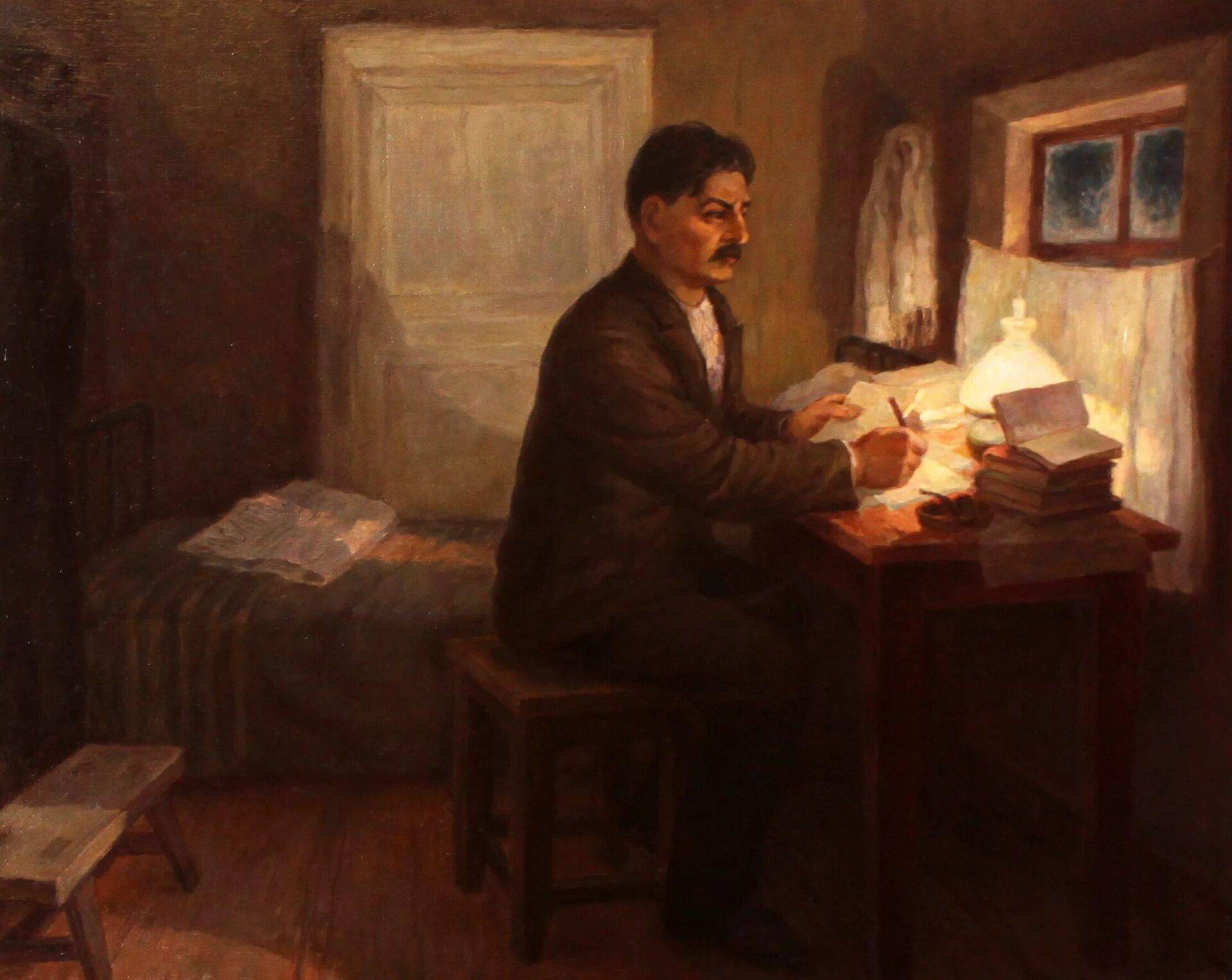
In 1907 Stalin started his revolutionry activities in Baku. Having returned from the Fifth (London) congress of the RSDWP, Stalin, in the interests of the party, transferred from Tiflis to Baku, the industrial heart of the South Caucasus and the most important center of the worker movement in Russia. Here he tirelessly worked to align the organizations around the ideas of Lenin, for the formation of armed masses under the banner of bolshevism. Stalin organized the struggle to displace the mensheviks from the worker districts of Baku. Stalin led the bolshevik legal and illegal organizations and their campaign for the election in the Third State Duma. His Instruction for the Social Democratic Deputies In the Third State Duma was implemented by the worker citizen councils in Baku on September 22. Stalin supervised the struggle of the Baku workers and under his leadership there was a massive campaign to unify the workers and the oil industry in preparation for collective educationabout the Leninist line. In the campaign to mobilize the masses in political struggle against the tsarist monarchy Stalin brought victory to the bolsheviks.
During the darkest hour of the Stolypinist reaction (Peter Stolypin was the Russian minister of interior affairs who enacted measures against the socialist uprisings. He implemented military tribunals to try and execute revolutionaries, executions often referred to as “Stolypin’s necktie.” And “Stolypin’s wagon” referred to trains taking people to exile) the proletariat of Baku acomplished an unprecedented spectacle; the proletarian struggle was growing and Stalin’s brainchild, the legal bolshevik newspaper, was echoing across all of Russia. The Baku workers were “the last Mohicans of massive political strikes!” as Lenin put it in 1908.
Stalin surrounded himself with the est and most experiened Bolshevik-Leninists; Ivan Fioletov, Alexander Saratovets (Efimov), Ivan Vatsek, Gennady Borkov, Ivan Maligin, Sergo Ordzhonikidze, Prokofy Dzhaparidze, Stepan Shaumian, Suren Spandarian, Khanlar Safaraliyev, and others. In the end, Stalin brought absolute victory to the Baku organizations. Baku became a citadel of bolshevism, with Stalin and the Baku proletariat as te tip of the spear in the all-Russian revolutionary movement.
The Baku period was a vital learning experience in Stalin’s life. In his words, “Two years of revolutionary activities with the oil workers taught me the practical aspects of management. Communication with the advanced proletariat of Baku, the likes of Vatsek, Saratovets and others on one hand, and fights in the deep conflict between workers and the oil industry on the other hand, I learned for the first time how to lead the popular masses of workers. There in Baku I received such an education, making this my second revolutionary baptism of fire.”
On March 25, 1908, Stalin was arrested and spent almost eight months out of a two year sentence in Solvychegodsk, Vologda Governate. On June 24, 1909, he ran away and returned to Baku for his illegal work. Stalin faithfully maintained the Leninist position and decisively fought against the liquidators (party members who supported dismantling the old organization after the failed 1905 revolution) and the otzovists (radical bolsheviks). The cenral party press published Stalin’s historic work Letters From the Caucasus and numerous articles in the newspaper Baku Proletariat. Stalin gave bold criticism of contemporary party organizations and drove planning to overcome the party crisis. He strongly criticized the liquidators, citing the Tiflis mensheviks as an example of liquidator renegadism in organizational and tactical matters. He sharply condemned the traitorous behavior of the Trotskyists and pushed for operational goals which were later implemented in the Prague party conference; the publication of legal party newspapers and the creation of an illegal practical party center in Russia.
Stalin was again arrested in Baku on March 23, 1910 and exiled back to Solvychegodsk. At the end of 1910 Stalin wrote a letter to Lenin adhering to Leninist tactics of preserving and strengthening the party and sharply condemned Trotsky’s “rotten lack of principles and proposed a plan to organize party work in Russia.
In the second half of 1911 the Saint Petersburg period of revolutionary activities began for Comrade Stalin. On September 6, 1911, Comrade Stalin escaped the Vologda Governate and went to Petersburg. In Petersburg Comrade Stalin made contact with the party organizations to unify and strengthen them against the liquidators; the mensheviks and Trotskyists. On September 9, 1911, Comrade Stalin was arrested in Petersburg and returned to the Vologda Governate. He escaped again in February 1912.
The most crucial event in the life of the party happened in January 1912. The Prague Conference of the RSDWP banished the mensheviks and established a new party; the party of Leninism, the Bolshevik party.
Bolsheviks prepared a type of party already prescribed in the pages of Spark. They prepared the party boldly, and despite everything. The whole history of the struggle against followers of “economism,” mensheviks, Trotskyists, otzovists, idealists of all types up to the imperial critics, was a history of preparation of such a party, based on Lenin’s writings. Stalin was the most faithful companion of Lenin in this struggle against their many enemies and a pillar in the struggle to create a revolutionary Marxist party, the Bolshevik Party.
By Alexandrov G.F., Galaktionov M.R., Krugkov V.S. and others.
Moscow, 1947
Chapter 1: 1879-1903
Chapter 2: 1904-1907
Chapter 3: 1907-1912
Chapter 4: 1912-1917 (COMING SOON)
Chapter 5: 1917-1918
Chapter 6: 1918-1919
Chapter 7: 1920-1926
Chapter 8: 1926-1929
Chapter 9: 1929-1936
Chapter 10: 1936-1941
Chapter 11: 1941-1946
Ian Kummer
I now have a new YouTube channel that I will use to upload videos from my travels around Russia. Expect new content there soon. Please give me a follow here.
Also feel free to connect with me on Quora (I sometimes share unique articles there).

I did not even realize that today is the anniversary of Stalin's death. RIP king