
People are flawed, but if their culture’s stories continually emphasize the importance of doing the right thing, then there is a higher chance that they will when the time comes.
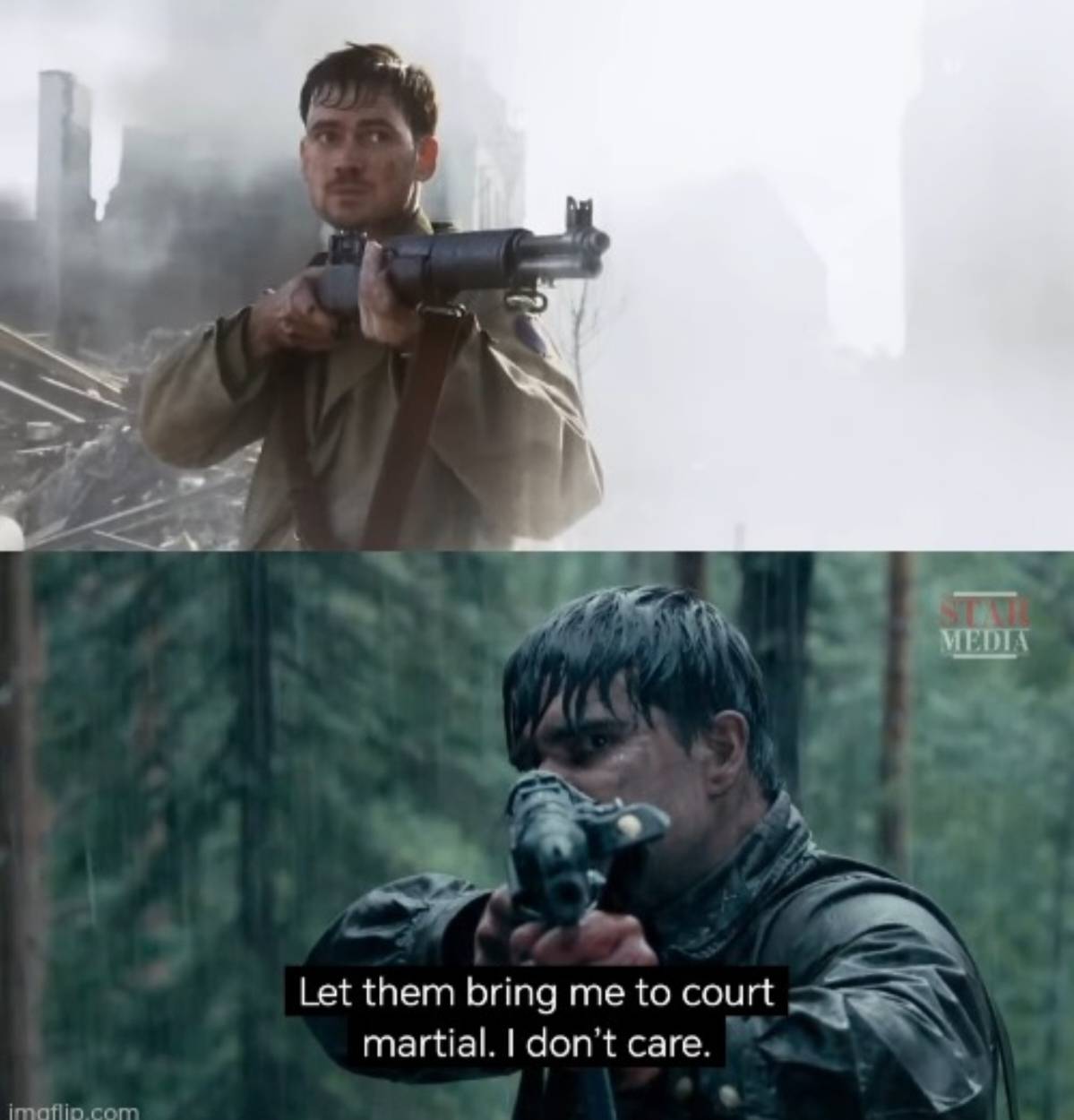
In the American film Saving Private Ryan, Upham convinces his squadmates to free a disarmed German rather than murder him. The movie portrays this as a bad thing to do, so creates the (incredibly unlikely) situation of that exact German coming back later and killing one of them while Upham freezes up and doesn’t intervene.
Upham finds redemption by tracking down that German and killing him, though he had already surrendered. This is portrayed as character growth on Upham’s part, and a good thing. The main moral of the story is that showing mercy to defeated enemies is bad, and murdering them is good. And it can also be inferred that revenge killing enemies you’re mad at is a good thing.
There is a Soviet and post-Soviet adaptation of the Vasiliev novel The Dawns Here Are Quiet, and the ending is strikingly similar similar to SPR. Vaskov is the sole survivor of his troop of female AA gunners against a German saboteur team. He speaks into their camp and takes the remaining Germans by surprise.
Needless to say, Vaskov by this point is very unhappy and quite keen on killing them where they stand, even declaring he doesn’t care if he is court martialed. But in the end, Vaskov decides to do the right thing and take them prisoner, though this is very difficult because he is wounded and has a long way to woke. Hours later as a search party arrives, Vaskov finally allows himself to pass out.
I found this scene interesting for a couple of reasons, especially in contrast to the SPR scene. Upham can speak German, but in the DHAQ scene there wasn’t any indication that the Germans can speak Russian, so from their perspective this is a guy screaming gibberish at them while waving around a gun. But they don’t need to understand him to get the gist of what he’s thinking, and why he is so unhappy with them.
But like Upham, Vaskov feels guilt for the deaths of comrades. Several of the girls had been killed as a direct result of Vaskov’s careless mistakes. Upham had satisfied himself by taking revenge on the German he had failed to stop earlier, but Vaskov doesn’t.
His declaration of not caring if he’s court martialled is irrational. Vaskov would be the only witness, so he could not be arrested unless he snitched on himself. It is quite the Dostoevsky moment. No one else would ever know, but he would know, and that’s too much.
I can still remember how dirty I felt when I watched this scene. Because I had completely anticipated Vaskov executing the enemies and was surprised when he didn’t. I’m sure this scene was not written or filmed with the intent to make the audience feel bad, but that is what happened to me.
There are cases of unlawful killing of prisoners in every war and the practice can’t realistically be completely stamped out. But I do think it makes a difference when children are raised to believe that you should always do what’s right, even in war, and there isn’t an excuse for not doing what’s right.
I am sure some Quorans will disagree, but I will say this. The author Boris Vasiliev had been to war, and Steven Spielberg has not. So I think Vasiliev’s take on morality under fire carries just a little bit more weight.
Ian Kummer
I now have a new YouTube channel that I will use to upload videos from my travels around Russia. Expect new content there soon. Please give me a follow here.
Also feel free to connect with me on Quora (I sometimes share unique articles there).

There does seem to be an “eastern” solution to this conundrum. Do not take mercenaries as prisoners.
There does seem to be an "eastern" solution to this conundrum. Do not take mercenaries as prisoners.