
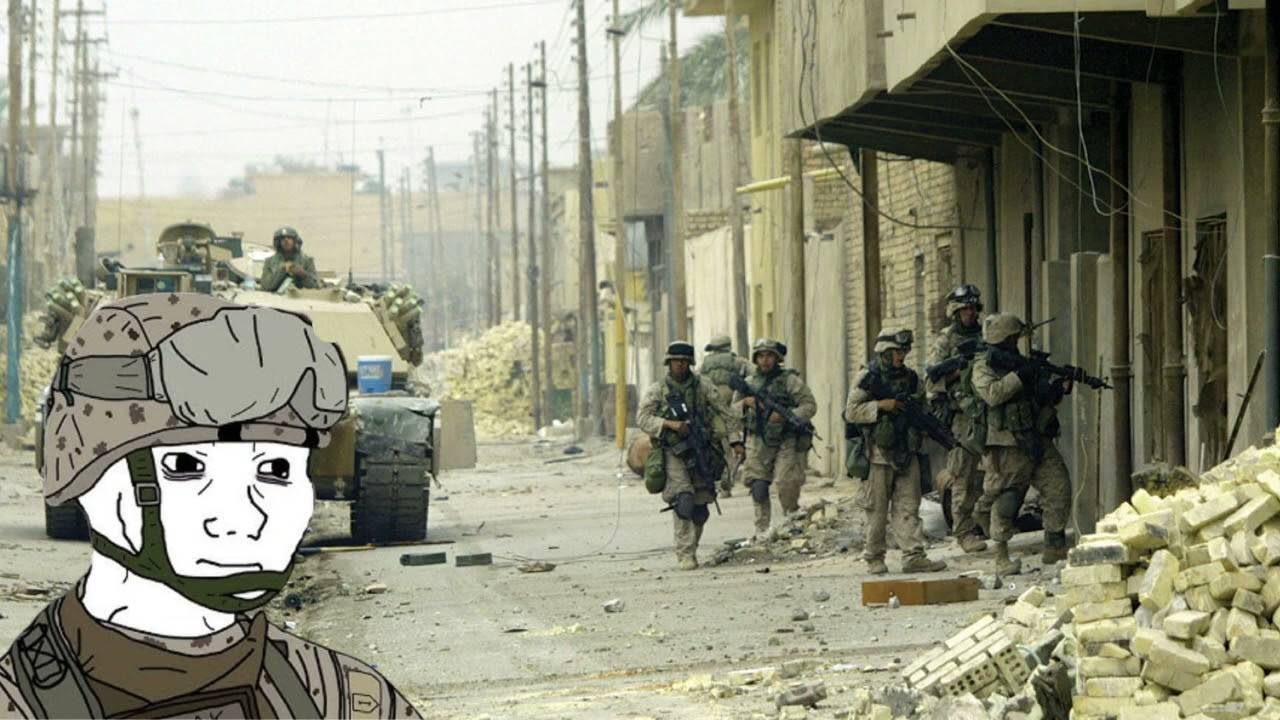
Russian casualties are in the grand scheme of things not very high. Western wars of choice just tend to be so deeply unpopular, any casualties greater than zero are considered high and get backlash.
Consider the second battle of Falujah in 2004. The insurgents inflicted a little over 500 casualties, including around 100 killed, on the US-led coalition. Don’t get me wrong, that’s very impressive, considering that the Iraqis were outnumbered five to one and outgunned a thousand to one. But that is the minimum expectation. Any conventional army with proper motivation and material support would have been able to inflict vastly greater losses on the coalition attackers.
Yet this is revered as the toughest and bloodiest battle US troops have ever fought since the Vietnam war! Imagine how steep the losses would have been if they were fighting a serious enemy, and not militia with caveman technology. Such losses are the reality of real wars, which no NATO country has any experience with in living memory.
Ian Kummer
I now have a new YouTube channel that I will use to upload videos from my travels around Russia. Expect new content there soon. Please give me a follow here.
Also feel free to connect with me on Quora (I sometimes share unique articles there).

In wartime everything is rationalization, dissembling, propaganda, and cope.
Historical casualty numbers are very much suspect, and controversial, especially if you take the adversary’s take on the same events.
I have learned that all “rules of thumb” (which do not take into account the differences in all kinds of military engagements) like the 3:1 required advantage for offense, or the 4:1 KiA:WiA ratio are also little more than self-fulfilling guestimates perpetuating a whole body of scholarship on flimsy foundations.
There are many other sectors (like ancient history) where all kinds of established narratives and views are based on the flimsiest of actual random evidence, and even then suffer from controversy that separate numbers by orders of magnitude.
In wartime everything is rationalization, dissembling, propaganda, and cope. Historical casualty numbers are very much suspect, and controversial, especially if you take the adversary's take on the same events. I have learned that all "rules of thumb" (which do not take into account the differences in all kinds of military engagements) like the 3:1 required advantage for offense, or the 4:1 KiA:WiA ratio are also little more than self-fulfilling guestimates perpetuating a whole body of scholarship on flimsy foundations. There are many other sectors (like ancient history) where all kinds of established narratives and views are based on the flimsiest of actual random evidence, and even then suffer from controversy that separate numbers by orders of magnitude.