How War Has Changed and What That Means For NATO

How war has changed and what that means for nato

Historically, the major motivations for war were population, resources, and national security, and all three are mostly self-explanatory. Pre-industrial agricultural countries constantly struggled with cyclical famines and food shortages, so it was beneficial to conquer other territories. A kingdom consisting of just a few provinces in one climate zone is in constant danger of crop … Read more

A Soldier’s Duty; Tomorrow There Will Be War

a soldier's duty, by Konstantin Rokossovksy

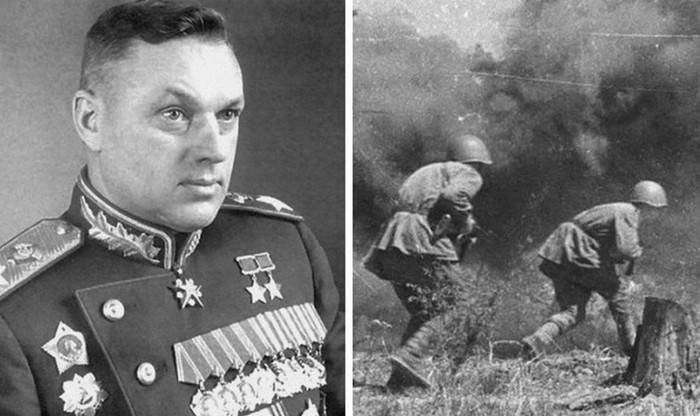
A Soldier’s Duty is the memoir of Marshal of the Soviet Union Konstantin Konstantinovich Rokossovsky (1896-1968), who commanded troops from the very beginning of the Great Patriotic War to the final days of the defeat of Nazi Germany.

Rokossovksy was an ethnic Pole who served in the Russian army in World War I, the Red Army in the Civil War, fell under the finger of suspicion and was imprisoned in 1937, released back to active duty in 1940, and was in command of a mechanized corps at the beginning of the Great Patriotic War.

A Soldier’s Duty describes the planning and implementation of huge military operations, the relationship between high command and the front, and interesting people Rokossovsky met along the way. You are now reading a translation based on the 5th edition of Soldatskii Dolg, published by Voinizdat in 1988. The 1988 edition includes text that had been considered too controversial and scandalous to print during Rokossovksy’s lifetime.

See the largest and most cataclysmic war in human history through the eyes of one of the allies’ greatest generals.

A Streetcar Named Desire and Feminist Socialism

a streetcar named desire

I just watched A Streetcar Named Desire, which I had heard of, but never seen before for some reason.

The movie starts with Blanche DuBois arriving in New Orleans, supposedly on a leave of absence from her teaching job, and taking a streetcar named Desire (that’s the name of the movie!) to meet her sister, Stella.

Stella hooked up with and married Stanley, an “alpha male” blue collar worker who gets into violent, stupid drunken brawls with other men at the bowling alley, which she finds irresistably sexy. But at home he’s a violent and stupid drunken husband (who would have thought?). Stanley, played by Marlon Brando, is just as tragic a character. He’s depicted as a smart though uneducated person who does genuinely love his wife; when he’s not driven out of his senses by anger and lust, Stanley is actually a very good and gentle human being. In a different environment that provided Stanley better education and social graces he might have been a good man.

The Weaponization of Identity Politics

The weaponization of identity politics

Today we will be on the podcast with our special guest Sæþór Randalsson, a dues-paying member of the ACP now living in Iceland and a member of the chairman of the executive board of the socialist party. Randalsson will be here to discuss “wokeness” and its impact politics and class consciousness.

Joseph Vissarionovich Stalin: a Short Biography

Joseph Vissarionovich Stalin: a Short Biography

Recently I came across this novelty in a small basement bookstore in central Moscow, a contemporary biography of Stalin, the man of steel himself. The book is like a time capsule to a different era. Before Krushchev’s de-Stalinization. Before even the legend of “Bloody Uncle Joe,” the mustached monster who eats naughty American schoolchildren who neglect their homework or stay up past bedtime.

If you want a glimpse of Soviet ideology, their perceptions of the world, and their perceptions of Stalin himself, untainted by historical revisionism, this is a good book to read.

Over the next several weeks I will publish my personal translation of this book in chapters. There are already other free translations floating around the internet, but this one is mine, with my own style and notes.