
The last 600 years—the totality of modern history—were an invention of the West. Art, industry, law, music, philosophy, science, and technology—there was no field of consequence we did not dominate. From Shakespeare, Beethoven, and Nietzsche to Newton, Poincaré, and Watson and Crick, almost every thinker and doer of note was a product of Western schools, families, and genius. And the few who were not—Satyendra Nath Bose (of the Bose-Einstein condensate), for one—were largely educated in the European tradition. Apart from Japan’s appearance on the world stage during the Meiji Restoration (with an attendant victory in the Russo-Japanese War) and her post-WWII development into a powerhouse of technological development, there were no major challenges to Euro-American hegemony until the concluding few decades of the 20th century.
Then things changed. Korea rose, establishing that one neither need be of European descent nor Japanese to build a decent microwave oven. The Chinese proved that they could make anything (with foreign guidance). And the Portuguese empire, which began in 1415, ended with the handover of Macau to the People’s Republic. Such was the closing of an era.
Still, we could maintain our claims of unquestionable preeminence. They might be weaker than they were in our days of wine and roses, but there was no one ready to replace us, and after the fall of the Soviet Union, nothing to impede us. America might not have colonies, but she garrisoned the globe, and extraordinary air power had served the national interest well since the storied days of General Curtis LeMay.
Even the attacks of September 11 did less to undermine Americans’ faith in occidental supremacy than to reinforce the idea that America could win—could impose democracy, peace, capitalism, and socially progressive ideals upon the target of our choice—if she but took off her gloves. Take them off she did. If the 1990s were the age of irrational exuberance for the financial markets, the 2000s were one of similar enthusiasm for the surveillance state, the special operative, the torturer, and the warfighter.
And that brings us to the present—2021—the withdrawal from Afghanistan is complete. The government we built and subsidized did not last long enough to bid us a fond farewell. When Britain departed India, the language, courts, and bureaucracy remained. When Portugal returned Macau, casinos, Catholicism, and tapas hung back. And when the French abandoned Vietnam, baguettes and coffee stood strong with the people.
What of Afghanistan? What have we left there? What remains but craters, toxic detritus, and arms (both large and small)? This—the absolute failure of the West’s final attempt at imperialism—is the most significant event in centuries. It shows what we cannot do. It elucidates what we cannot change and whom we cannot influence.
We abandoned our bases in the night. We packed up, turned off the lights, and flew home. Victors do not do this. They do not forsake their accomplishments as easily as that.
What of the future? Our long 2020, much like the long 19th century, may extend well beyond its chronological terminus, not concluding until 2035. By then, every major advantage the West has will almost certainly be matched by another people, if not many other peoples. This is wonderful. This is the best of news.
Now, we need care for no one else. The empire is dead. Even the illusion of empire has shattered. Our elite will delude themselves for some time still. Let them. Feed their idiocy, cultivate it, and turn it against them. They are a blight. The universe needs no masters, and billions of lives will improve once these masters are gone.
As for us, the American people, we must know this: These are good times, and they are getting better, despite protestations to the contrary.
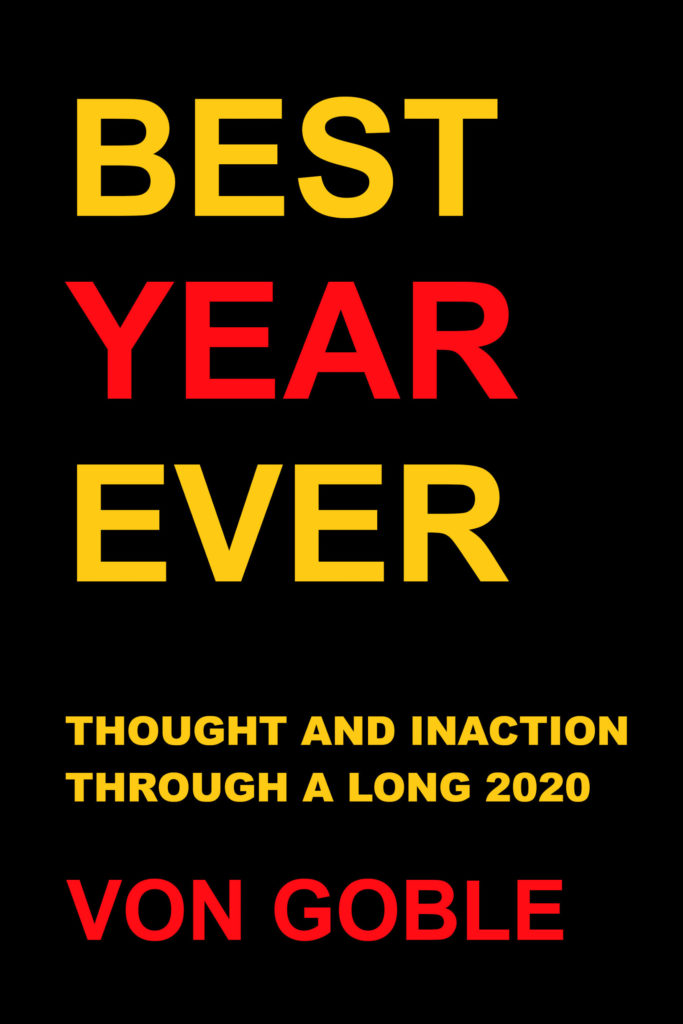
Because these are the best years ever.
Buy Best Year Ever today.


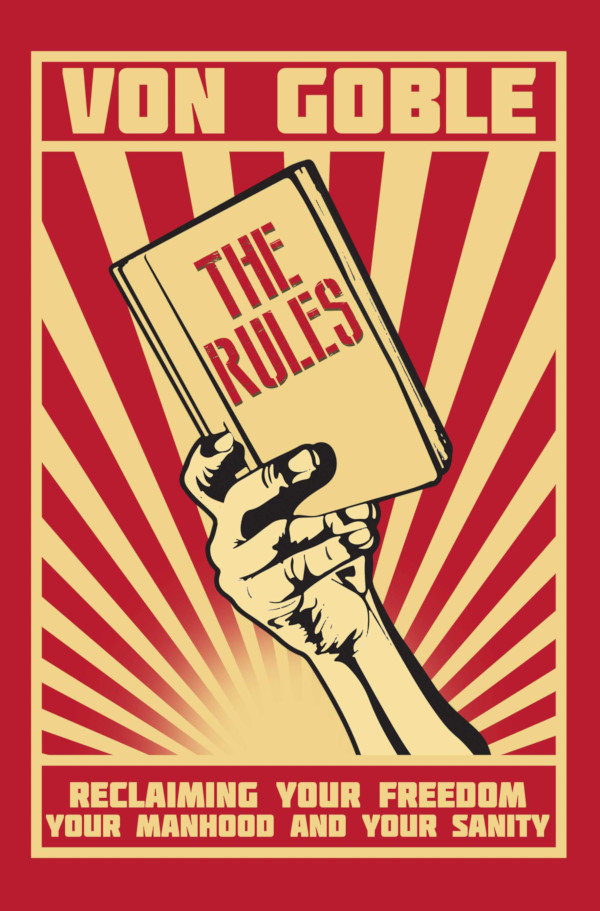
The Rules
The Rules is a philosophy and self-inquiry text designed to help readers develop mental discipline and set life goals. It does this by way of guided readings and open-ended questions that facilitate the rational and systematic application of each Rule.
Put another way: The Rules is a book designed to help men survive and thrive in the West.
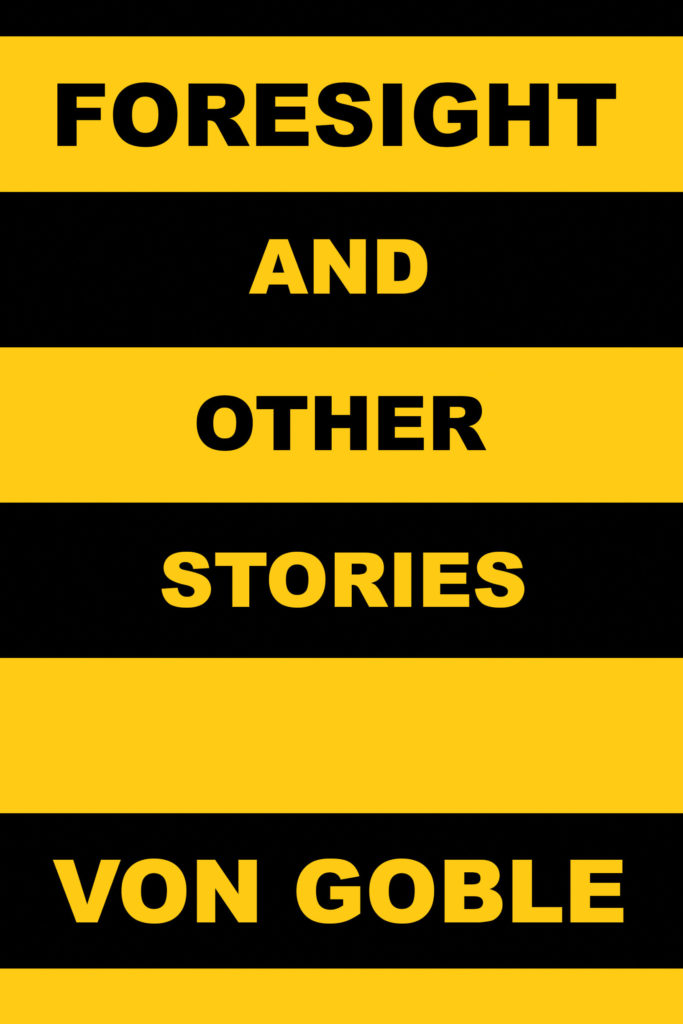
Foresight (And Other Stories)
Four tales across time and distance. Always satirical and frequently dark, this collection considers the breadth of isolation and the depth of connection.

Brant von Goble is a writer, editor, publisher, researcher, teacher, musician, juggler, and amateur radio operator.
He is the author of several books and articles of both the academic and non-academic variety. He owns and operates the book publishing company Loosey Goosey Press.

Subscribe to the Weekly Roundup
