
The 1986 British animated film When the Wind Blows offers a bleak warning about mutually assured destruction, but no one heeded the advice.
When the Wind Blows shows an elderly couple, Jim and Hilda, survive a nuclear attack and make their best efforts to get through the aftermath, but slowly die from radiation sickness.
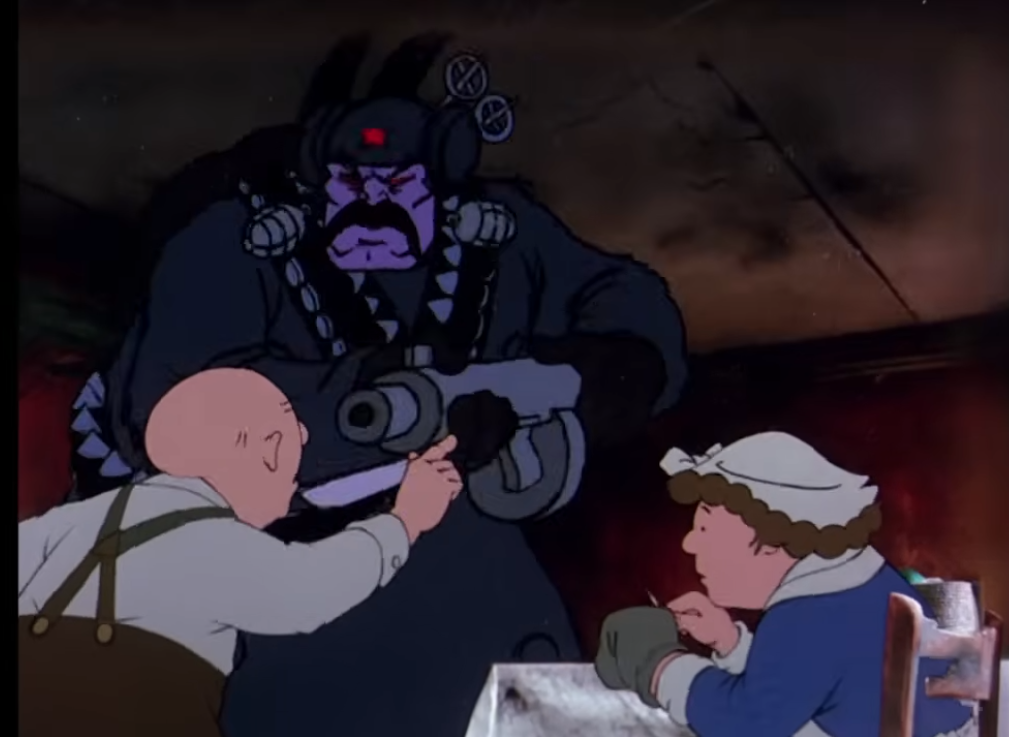
Almost five years ago I reviewed the British nuclear war movie Threads, which I criticized for not offering any useful call to action. I consider When the Wind Blows the better of the two movies, which is more biting in its criticism of the regime. Jim is a jingoistic patriot who daydreams of all the ways he can help in the war effort, which he compares to the fight against Nazi Germany and vows to bring democracy to the Russians “whether they like it or not.” Hilda has no interest in war or politics so is unmoved by her husband’s fervent overtures. In one scene when Jim is daydreaming of a Russian ground invasion, Hilda suggests offering them a cup of tea, though he warns her that this would be treason.
We have here two contrasting stereotypes. Hilda, on one hand, is too preoccupied with her daily life to consume media, so the necessity of World War III escapes her. But being unaware of world events doesn’t spare her from them either, which is an important lesson for the viewer. Jim is the opposite with his absolute confidence in the government and the cause of saving the world from Russian aggression. Though despite consuming so much media, Jim is not actually better informed than his wife. All of his stereotypes about Russia are decades out of date. For example, he thinks Krushchev is still the absolute ruler of the “Soviet Supreme” and doesn’t seem to be aware of anything that happened there since the 1960s. At one point he describes the Russian ground invasion of Britain that would follow the nuclear strikes (though the audience is aware that both sides are too devastated to even think about anything like that). Hilda suggests offering the Russians a cup of tea, though Jim insists that would be treason.
But what they both have in common is that they survived World War II, and think this prepares them for World War III, but it doesn’t. Oddly enough, their preoccupation with WWII is shared by the government pamphlets dutifully read by Jim. They’re all oriented toward surviving the German blitz, and does nothing to prepare them for nuclear fallout. They collect and drink rain water, which gives them radiation sickness and leads to their deaths. By the way, according to what I looked up on Reddit discussions, this is apparently an accurate portrayal of British state survival pamphlets, and not an exaggeration. Perhaps the point of the pamphlets was to make people feel secure in their preparation, and whether or not they were actually prepared was of little importance.
While the movie seems to have adequately portrayed its intended antiwar message, I don’t see much of this sentiment in online discussions. Everybody understands MAD, that it inevitably leads to annhilation, but don’t see it as unnecessary and avoidable. If anything, nuclear war is treated like a hurricane or volcanic eruption, a force of nature immune to human intervention, rather than something caused by humans.
Cold War propaganda at the very least acknowledged that nukes exist, while the propaganda of today does not even have that. On the contrary, every potential conflict is treated as a small, brief war against a weak enemy. As I wrote back in April 2022, western think tanks all treated a war in Ukraine as a few days or weeks of fighting in a few villages before Russia collapses. Now in Autumn 2026, the formula seems to be repeating itself with Estonia, again with not even a mention of possible escalation that might get out of hand.
You can watch When the Wind Blows on YouTube: